# 对数据结构的认知
学习数据结构,可以说是在修炼内功,一些总结些常见的数据结构
# 栈和队列
首先,栈和队列都是 线性储存数据 的一种方式,且是按照某种规则
- 栈 (先进后出)
- 队列 ( 先进先出 )
# 栈的封装(基于数组)
JavaScript 中没有这种数据结构,我们需要自己封装
// 实现栈,基于数组
class Z {
  constructor() {
    this.items = [];
  }
  // 添加数据 入栈
  push(item) {
    this.items.push(item);
  }
  // 删除数据 出栈
  pop() {
    this.items.pop();
  }
  // 判断是否为空
  isEmpty() {
    return this.items.length === 0;
  }
  // 判断栈的长度
  len() {
    return this.items.length;
  }
}
# 队列的封装(基于数组)
我们会发现,栈和队列代码其实差不多,就是出栈的方式不同
class D {
  constructor() {
    this.items = [];
  }
  // 添加数据 入栈
  push(item) {
    this.items.push(item);
  }
  // 删除数据 出栈
  pop() {
    this.items.shift();
  }
  // 判断是否为空
  isEmpty() {
    return this.items.length === 0;
  }
  // 判断栈的长度
  len() {
    return this.items.length;
  }
}
# 链表
# 链表的优势
如果说链表的优势,那就要说说栈和队列的这种数据结构的缺点了
因为 栈和队列 是居于数组的,其实数组在 查找 数据和 修改 数据的时候效率还可以,但是在 添加数据及删除数据 时,效率很低。
这是因为在向数组里面添加和删除数据时,数组的 下标 都要变化,尤其是当数组的数据量很大,添加和删除数组的第一个元素,效率问题尤为突出
而链表这种数据结构,就是来解决这个问题的
# 单项链表
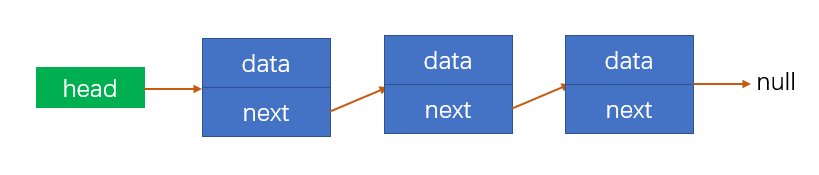
单项链表是一种 链式存储的线性表,是由一组节点组成的集合,每一个节点都存储了下一个节点的地址;指向另一个节点的引用叫链;和数组中的元素内存地址是连续的相比,链表中的所有元素的内存地址不一定是连续的,如图:
# 单项链表封装
function linkedList() {
  //链表的节点类
  function Node(data) {
    this.data = data;
    this.next = null;
  }
  this.head = null; // 链表的hede 可以理解为指针
  this.length = 0; //链表的长度
  // 添加方法
  linkedList.prototype.append = function(data) {
    var newNode = new Node(data);
    // 判断现在的链表是不是空
    if (this.length == 0) {
      // 添加的是第一个节点
      this.head = newNode;
    } else {
      // 不是第一个节点,找到最后一个节点,在其后面追加节点
      var current = this.head;
      while (current.next) {
        current = current.next; //一直往下找
      }

      // 追加最后一个节点
      current.next = newNode;
    }
    this.length++;
  };
  // 插入方法,可以把数据插入到链表的任何地方
  linkedList.prototype.insert = function(position, data) {
    // 对 position 越界判断
    if (position < 0 || position > this.length) {
      return false;
    }
    var newNode = new Node(data);
    // 判断是不是插入到第一个
    if (position == 0) {
      newNode.next = this.head;
      this.head = newNode;
    } else {
      var index = 0;
      var current = this.head;
      var previous = null; // 记录上一个节点
      while (index++ < position) {
        previous = current;
        current = current.next;
      }

      newNode.next = current;
      previous.next = newNode;
    }
    this.length++;
    return true;
  };
  // 获取对应位置上的数据
  linkedList.prototype.get = function(position) {
    if (position < 0 || position >= this.length) {
      return null;
    }
    var current = this.head;
    var index = 0;
    while (index++ < position) {
      current = current.next;
    }
    return current.next;
  };
  // 获取对应数据的下标值
  linkedList.prototype.indexOf = function(data) {
    var current = this.head;
    var index = 0;
    while (current) {
      if (current.data == data) {
        return index;
      }
      current = current.next;
      index++;
    }
    return -1;
  };
  // 更新方法
  linkedList.prototype.updata = function(position, data) {
    if (position < 0 || position >= this.length) {
      return false;
    }
    var current = this.head;
    var index = 0;
    while (index++ < position) {
      current = current.next;
    }
    current.data = data;
    return true;
  };
  // 根据位置 删除元素
  linkedList.prototype.removeAt = function(position) {
    if (position < 0 || position >= this.length) {
      return false;
    }
    //  删除第一个
    if (position == 0) {
      this.head = this.head.next;
    } else {
      var current = this.head;
      var previous = null;
      var index = 0;
      while (index++ < position) {
        position = current;
        current = current.next;
      }
      previous.next = current.next;
    }
    this.length -= 1;
    return true;
  };
  // 字符串化
  linkedList.prototype.toString = function() {
    var current = this.head;
    var listString = "";
    // 循环获取一个个节点
    while (current) {
      listString += current.data + " ";
      current = current.next;
    }
    return listString;
  };
}
# 双向链表
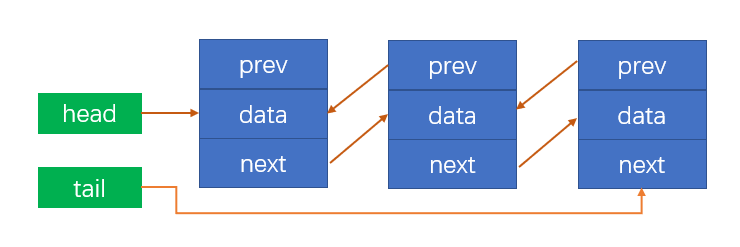
简单来说,在单项链表中,一个节点只有一个指针且指向下一个节点。所以在单项链表中,我们要想查找一个节点的上一个节点就比较困难(只能从头遍历)
而双向链表就是做这个事情,之所以为双向链表,是因为在双向链表中,每个节点两个指针,一个是指向上一个节点的数据,另一个指向下一个节点的数据:如下图所示:
# 双向链表封装
// 双向链表
function DoublyList() {
  this.head = null; //指针 指向第一个
  this.tail = null; // 指针 指向最后一个
  this.length = 0; // 列表的长度
  // 内部节点类
  function Node(data) {
    this.data = data;
    this.prev = null;
    this.next = null;
  }
  // 插入到链表的尾部
  DoublyList.prototype.append = function(data) {
    // 判断是否添加的第一个节点
    var newNode = new Node(data);
    if (this.length == 0) {
      this.head = newNode;
      this.tail = newNode;
    } else {
      newNode.prev = this.tail;
      this.tail.next = newNode;
      this.tail = newNode;
    }
    this.length += 1;
  };
  // 插入
  DoublyList.prototype.insert = function(position, data) {
    if (position < 0 || position > this.length) return false;
    var newNode = new Node(data);
    // 插入的节点是第一个节点
    if (this.length == 0) {
      this.head = newNode;
      this.tail = newNode;
    }
    if (position == 0) {
      this.head.prev = newNode;
      newNode.next = this.head;
      this.head = newNode;
    } else if (position == this.length) {
      newNode.prev = this.tail;
      this.tail.next = newNode;
      this.tail = newNode;
    } else {
      var current = this.head;
      var index = 0;
      while (index++ < position) {
        current = current.next;
      }
      // 更改对应指针指向
      newNode.next = current;
      newNode.prev = current.prev;
      current.prev.next = newNode;
      current.prev = newNode;
    }
    this.length += 1;
  };
  // 获取对应下标的数据
  DoublyList.prototype.get = function(position) {
    if (position < 0 || position >= this.length) return false;
    // 获取元素
    var current = this.head;
    var index = 0;
    while (index++ < position) {
      current = current.next;
    }
    return current.data;
  };
  // 获取对应值的下标
  DoublyList.prototype.indexOf = function(data) {
    var current = this.head;
    var index = 0;
    while (current) {
      if (current.data == data) {
        return index;
      }
      index++;
      current = current.next;
    }
    return -1;
  };
  // 根据下标更新
  DoublyList.prototype.updata = function(position, newData) {
    if (position < 0 || position >= this.length) return false;
    // 获取元素
    var current = this.head;
    var index = 0;
    while (index++ < position) {
      current = current.next;
    }
    current.data = newData;
    return true;
  };
  // 根据下标删除
  DoublyList.prototype.removeAt = function(position) {
    if (position < 0 || position > this.length) return false;
    if (this.length == 1) {
      this.head = null;
      this.tail = null;
    }

    if (position == 0) {
      this.head.next.prev = null;
      this.head = this.head.next;
    } else if (position == this.length - 1) {
      this.tail.prev.next = null;
      this.tail = this.tail.prev;
    } else {
      var index = 0;
      var current = this.head;
      while (index++ < position) {
        current = current.next;
      }

      current.prev.next = current.next;
      current.next.prev = current.prev;
    }
  };
  DoublyList.prototype.toString = function() {
    return this.bacckwardToString();
  };
  // 从后向前遍历
  DoublyList.prototype.forwardToString = function() {
    var current = this.tail;
    var resString = "";
    while (current) {
      current = current.prev;
      resString += current.data + " ";
    }
    return resString;
  };
  // 从前向后遍历
  DoublyList.prototype.bacckwardToString = function() {
    var current = this.head;
    var resString = "";
    while (current) {
      current = current.next;
      resString += current.data + " ";
    }
    return resString;
  };
}
# 二叉树
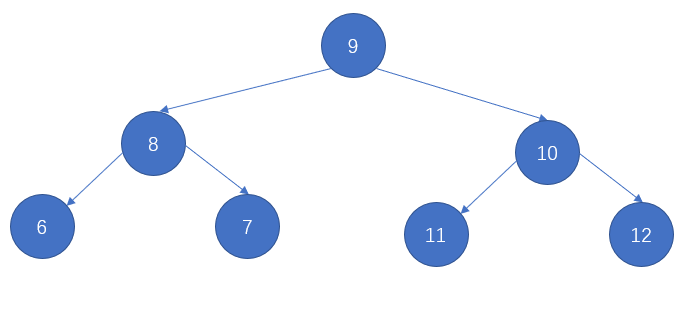
二叉树的一个节点 Node 由 data,left,right 组成,data 保存本节点的值,left 指向左节点,right 指向右节点。二叉树有一个特殊性:相对本节点较小的值保存在左节点,相对本节点较大的值保存在右节点,该特性能让查值效率提高
# 特点
- 每个节点只有 left 和 right
- left 值小于 right 值
- 整个数的最小值在最左边,最大值在最右边
# 二叉树封装
function BinSer() {
  function Node(key) {
    this.key = key;
    this.left = null;
    this.right = null;
  }
  // 属性
  this.root = null;
  // 方法
  // 插入数据
  BinSer.prototype.insert = function(key) {
    // 1.创建一个节点
    var newNode = new Node(key);
    // 2.判断根节点是否有值
    if (this.root == null) {
      this.root = newNode;
    } else {
      // 有根节点
      this.insertNode(this.root, newNode);
    }
  };

  BinSer.prototype.insertNode = function(node, newNode) {
    // node 被比较的节点
    if (newNode.key < node.key) {
      // 向左查找
      if (node.left == null) {
        node.left = newNode;
      } else {
        this.insertNode(node.left, newNode);
      }
    } else {
      // 向右查找
      if (node.right == null) {
        node.right = newNode;
      } else {
        this.insertNode(node.right, newNode);
      }
    }
  };

  // 先序遍历
  BinSer.prototype.preOrder = function(handler) {
    this.preOrderNode(this.root, handler);
  };
  BinSer.prototype.preOrderNode = function(node, handler) {
    if (node != null) {
      handler(node.key);
      this.preOrderNode(node.left, handler);
      this.preOrderNode(node.right, handler);
    }
  };
  BinSer.prototype.max = function() {
    var node = this.root;
    var key = null;
    while (node != null) {
      node = node.right;
      key = node.right;
    }
    return key;
  };
  BinSer.prototype.min = function() {
    var node = this.root;
    var key = null;

    while (node != null) {
      node = node.left;
      key = node.left;
    }
    return key;
  };
}
# 哈希表
# 什么是哈希表
网上解释:Hash 表也称散列表,也有直接称为哈希表,是一种根据关键字值(key-value)而直接进行访问的数据结构。它是通过把关键字映射到数组的下标来加快查找速度。普通的数据结构中查找某一个关键字通常需要遍历整个数据结构,时间复杂度 O(n),而哈希表只需要 O(1)的时间级
自己解释: 哈希表类似与我们现在的对象,是通过 key 去得到对应的 value
# 需要思考的问题
怎么合理的去规定一个容器,然后按照 key-value 的方式去存放这些数据
比如 我现在有 1000 个员工(员工包括姓名,电话,工作等信息)现在怎么把这些员工的信息合理的储存起来?(当然用 json 存储时最合理的,我们可以把 json 看作时一个语法糖那计算机底层时怎么存的呢)
在计算机中,我们首先要申请一个容器去存放这些数据,比如我就申请 1000 个地址,就会有以下问题:
- 那要是再添加员工了怎么办呢?
- 如果公司裁员,裁掉了 900 个员工,那剩下 10 个员工用 1000 个地址存放是不是很浪费?
那么 哈希函就是解决这种情况的一种数据结构
# 哈希函数
哈希函数做了一个事情, 就是把数据 均匀 的分布在一定长度的容器里,从而减少重复的概率
function hashFunc(str, size) {
  var hashCode = 0;

  for (var i = 0; i < str.length; i++) {
    hashCode = 37 * hashCode + str.charCodeAt(i);
  }
  var index = hashCode % size;

  return index;
}

console.log(hashFunc("aa", 10));
console.log(hashFunc("bb", 10));
console.log(hashFunc("cc", 10));
// 2 6 4
但是即使如此,当我们再向里面添加数据时还是有可能重复,一把有两种解决方案
开放地址法 开发地址法中,若数据项不能直接存放在由哈希函数所计算出来的数组下标时,就要寻找其他的位置。分别有三种方法:线性探测、二次探测以及再哈希法
也就是说,当插入数据时,如果得知某个地址被占用,就去找下一个没有被占用的地址存放数据链地址法 链地址法中,装填因子(数据项数和哈希表容量的比值)与开放地址法不同,在链地址法中,需要有 N 个单元的数组中转入 N 个或更多的数据项,因此装填因子一般为 1,或比 1 大(有可能某些位置包含的链表中包含两个或两个以上的数据项)。
也就是说,每一个地址是一个数组,把相同下标的数据都存放再一个地址,当查找数据时先按照下标查找到对应的地址,再从地址的数组中线性遍历这里我们实现下链地址法的封装
function HashTable() {
  this.storage = [];
  this.count = 0;
  this.limit = 7;
  HashTable.prototype.hashFunc = function(str, size) {
    var hashCode = 0;
    for (var i = 0; i < str.length; i++) {
      hashCode = 37 * hashCode + str.charCodeAt(i);
    }
    var index = hashCode % size;
    return index;
  };
  // 插入,修改
  HashTable.prototype.put = function(key, value) {
    // 根据key 获取对应的index
    var index = this.hashFunc(key, this.limit);
    // 根据index 取数据
    var bucket = this.storage[index];
    // 判断该bucket 是否为空
    if (bucket == null) {
      bucket = [];
      this.storage[index] = bucket;
    }
    // 判断是不是修改数据
    for (var i = 0; i < bucket.length; i++) {
      var tuple = bucket[i];
      if (tuple[0] == key) {
        tuple[1] = value;
      }
    }
    // 添加
    bucket.push([key, value]);
    this.count += 1;
  };
  // 获取方法
  HashTable.prototype.get = function(key) {
    var index = this.hashFunc(key, this.limit);
    var bucket = this.storage[index];
    if (bucket == null) {
      return null;
    }
    for (var i = 0; i < bucket.length; i++) {
      var tuple = bucket[i];
      if (tuple[0] == key) {
        return tuple[1];
      }
    }
    return null;
  };
  // 删除方法
  HashTable.prototype.remove = function(key) {
    var index = this.hashFunc(key, this.limit);
    var bucket = this.storage[index];
    if (bucket == null) {
      return false;
    }
    for (var i = 0; i < bucket.length; i++) {
      var tuple = bucket[i];
      if (tuple[0] == key) {
        bucket.splice(i, 1);
        this.count -= 1;
        return true;
      }
    }
    return false;
  };
}
数组扁平化 →